
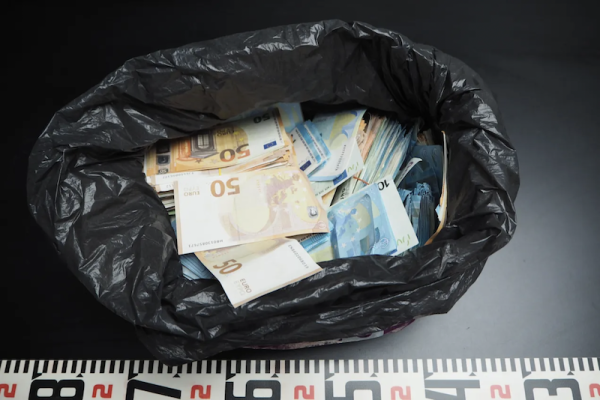

Police confiscated the counterfeit euro notes. Photo: Poliisi
- Next Article Student aid cut looms, Helsinki flats stay full
Finnish police have uncovered an organised drug smuggling operation involving at least 15 kilograms of cocaine, counterfeit currency, and an international network of suspects.
The investigation began in March when officers detained two individuals and seized five kilograms of cocaine, 30 kilograms of marijuana, and over €100,000 in counterfeit euro notes. The suspects had rented an apartment in Lauttasaari, Helsinki, which was used as a storage site for drugs.
Police said the smuggling operation had been active since at least August 2024. It involved suspects from multiple countries and included methods such as transporting drugs in vehicles occupied by young children. In one instance, narcotics were moved in a car with a child under the age of three.
“This is highly unusual in organised drug crime. It’s rare that parties attempt to pay each other using counterfeit money,” said Markku Juurikkamäki, Detective Chief Inspector and lead investigator on the case.
The counterfeit euro notes were described as sophisticated. Initial inspection by police failed to identify them as fake.
“Our investigators didn’t immediately recognise the notes as counterfeit. Only after a closer look did suspicions arise,” Juurikkamäki told Yle.
Authorities have not determined the origin of the forged notes, and investigations continue into how many may still be in circulation.
The group is also suspected of laundering drug profits by transferring hundreds of thousands of euros abroad to destinations such as Kosovo and Belgium.
According to police, the street price of cocaine in Finland can reach €100 per gram. Officials say both trafficking and usage of the drug have increased significantly in recent years.
In total, thirteen individuals are suspected in connection with the case. Five remain in pretrial detention. Many of the key suspects are related to one another.
Those involved include Finnish citizens, dual nationals, and individuals from Kosovo, Albania, and Estonia.
Police say the operation was highly organised and structured across national borders, with roles divided among individuals managing smuggling, storage, transportation, and financial transfers.
Investigators are continuing to trace the group’s financial activities, international connections, and potential links to other criminal networks.
HT
- Next Article Student aid cut looms, Helsinki flats stay full
Source: www.helsinkitimes.fi
